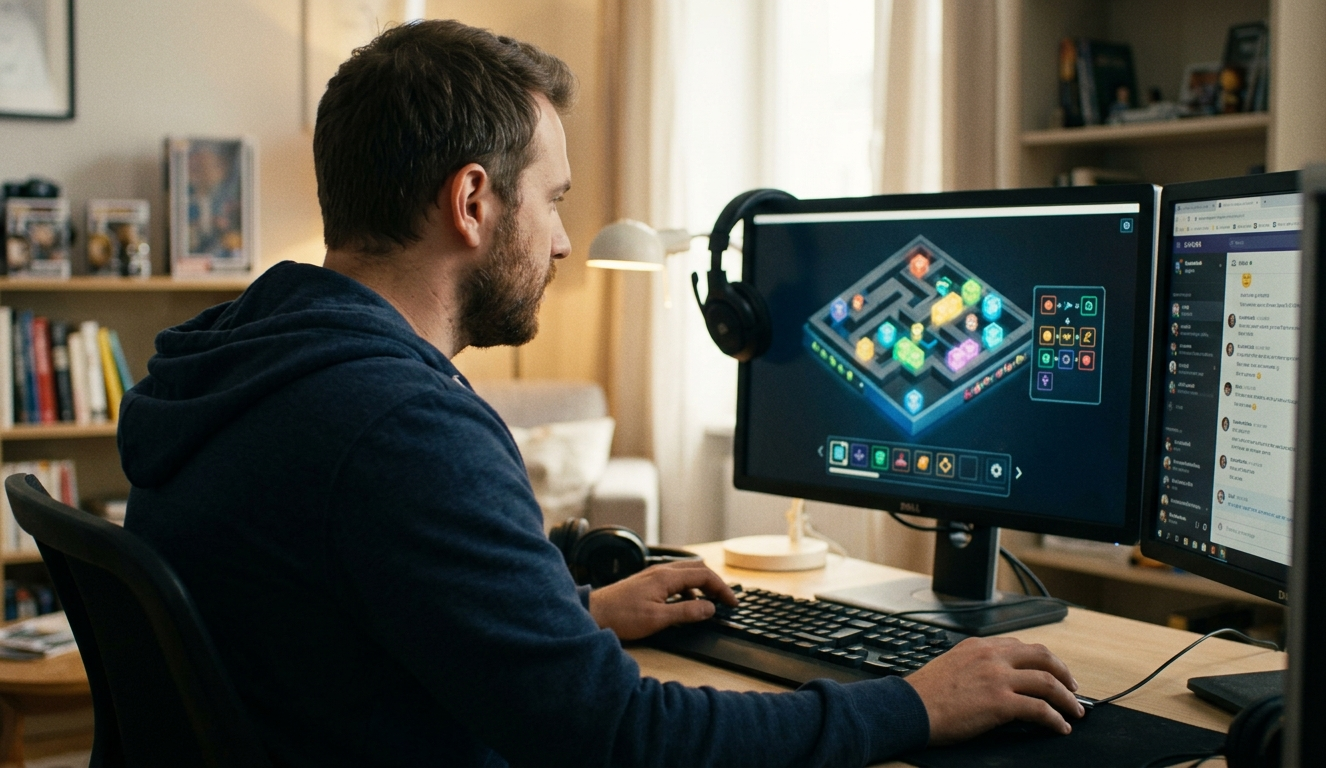
There’s something deeply satisfying about solving a puzzle. That moment when everything clicks—the pattern makes sense, the answer appears, and you feel just a little sharper than before. Now imagine getting that feeling not once, but over and over again while playing online games.
Puzzle-based online games have quietly become one of the most rewarding ways to spend time on a screen. They’re not loud, fast, or chaotic. Instead, they challenge your thinking, stretch your focus, and keep your mind actively engaged. And the best part? You’re having fun while doing it.
So what makes these games so effective—and surprisingly addictive—in a positive way? Let’s explore.
Why Puzzle Games Feel So Engaging
Puzzle games work differently from most other genres. They don’t rely on speed or reflexes. Instead, they tap into curiosity. You’re given a problem, and your brain immediately wants to solve it.
It could be:
- Finding patterns
- Solving sequences
- Arranging pieces
- Decoding clues
This natural curiosity creates a loop: you try, you learn, you adjust, and you try again. Each attempt brings you closer to the solution, and that steady progress keeps you hooked.
They Encourage Active Thinking, Not Passive Scrolling
In many digital experiences, it’s easy to become passive—scrolling, watching, or tapping without much thought. Puzzle-based games flip that dynamic.
They demand your attention.
You can’t just sit back and let things happen. You have to:
- Analyze situations
- Make decisions
- Think ahead
This kind of active engagement helps your brain stay involved, which is why even short sessions can feel mentally refreshing rather than draining.
Memory Gets a Subtle Workout
Many puzzle games require you to remember patterns, positions, or sequences. Whether it’s recalling a previous move or recognizing a recurring structure, your memory is constantly being used.
Over time, this repeated use can help improve:
- Short-term memory
- Pattern recognition
- Recall speed
It’s not about instant transformation, but about consistent mental engagement. Think of it as giving your brain regular, low-intensity exercise.
Problem-Solving Becomes Second Nature
One of the biggest benefits of puzzle games is how they train you to approach problems.
Instead of guessing randomly, you start to:
- Break problems into smaller parts
- Look for clues and connections
- Test different strategies
This mindset doesn’t stay inside the game. It often carries into everyday situations—helping you think more clearly and approach challenges with a calmer, more structured perspective.
Focus and Patience Improve Over Time
Puzzle games don’t usually reward rushing. In fact, rushing often leads to mistakes.
To succeed, you need:
- Patience
- Attention to detail
- Willingness to slow down
This creates a different kind of gaming experience—one that values careful thinking over quick reactions. As you spend more time with these games, your ability to focus for longer periods can naturally improve.
Stress Relief Through Structured Thinking
It might sound surprising, but puzzle games can actually feel relaxing.
Why?
Because they provide:
- Clear goals
- Defined rules
- Predictable outcomes
In a world that often feels unpredictable, this structure can be calming. You know what needs to be done—you just have to figure out how.
Solving puzzles can also create a sense of closure. Each completed level gives you a small win, which can boost your mood and reduce mental clutter.
Variety Keeps Things Interesting
Puzzle-based online games come in many forms, and that variety keeps them from feeling repetitive.
You might explore:
- Logic puzzles that test reasoning
- Word puzzles that challenge vocabulary
- Number-based puzzles that require calculation
- Visual puzzles that rely on spatial awareness
Each type activates different parts of your thinking, which keeps your brain engaged in new ways.
The “Challenge Without Pressure” Sweet Spot
One of the reasons puzzle games work so well is that they often sit in a perfect middle ground.
They’re challenging—but not overwhelming.
Most puzzle games are designed to:
- Gradually increase difficulty
- Allow multiple attempts
- Avoid harsh penalties for mistakes
This balance encourages you to keep trying without feeling frustrated. You’re challenged just enough to stay interested, but not so much that you want to quit.
Progress Feels Earned
In puzzle games, success usually comes from understanding—not luck.
When you solve something, it’s because:
- You noticed a pattern
- You adjusted your approach
- You stayed persistent
This makes progress feel meaningful. Each solved puzzle is proof that you’ve learned something, even if it’s small.
Playing Smart: Keeping It Balanced
While puzzle games can be beneficial and enjoyable, balance is still important.
Here are a few simple tips:
- Take breaks between sessions
- Avoid playing for long stretches without rest
- Mix gaming with other activities
This ensures that your gaming remains a positive and refreshing part of your routine, rather than something that takes over your time.
It’s Not About “Becoming Smarter Overnight”
Let’s keep it real—puzzle games aren’t magic tools that instantly boost intelligence. But they do encourage habits that support mental engagement.
They help you:
- Stay curious
- Think more actively
- Approach problems differently
Over time, these small effects can add up, especially when combined with other healthy habits like reading, learning, and staying physically active.
Top Puzzle-Based Online Games to Try
If you’re looking to dive into puzzle games that are both engaging and mentally stimulating, here are some popular options that players keep coming back to:
- Monument Valley – Known for its stunning visuals and clever level design, this game challenges your spatial thinking with optical illusions and shifting architecture.
- The Room – A series of immersive puzzle games where you solve intricate mechanical boxes. It’s perfect for players who enjoy detailed problem-solving and exploration.
- Portal 2 – A mix of puzzles and storytelling, this game uses physics-based challenges that require creative thinking and experimentation.
- Brain Out – A fun and tricky game filled with unexpected solutions that push you to think outside the box.
- Sudoku (Online Versions) – A classic that continues to sharpen logical reasoning and pattern recognition across countless online platforms.
- Lumosity – Offers a variety of short, science-inspired games designed to challenge memory, attention, and problem-solving skills.
Each of these games offers a different kind of challenge, so you can explore what suits your thinking style best while keeping your mind active and engaged.
Final Thoughts
Puzzle-based online games offer something rare in today’s fast-paced digital world—they slow you down while still keeping you engaged. They challenge your mind without overwhelming it. They reward patience, curiosity, and persistence. And most importantly, they make thinking feel fun.
So the next time you pick up a puzzle game, remember—you’re not just passing time. You’re giving your brain something meaningful to do, one solution at a time.